
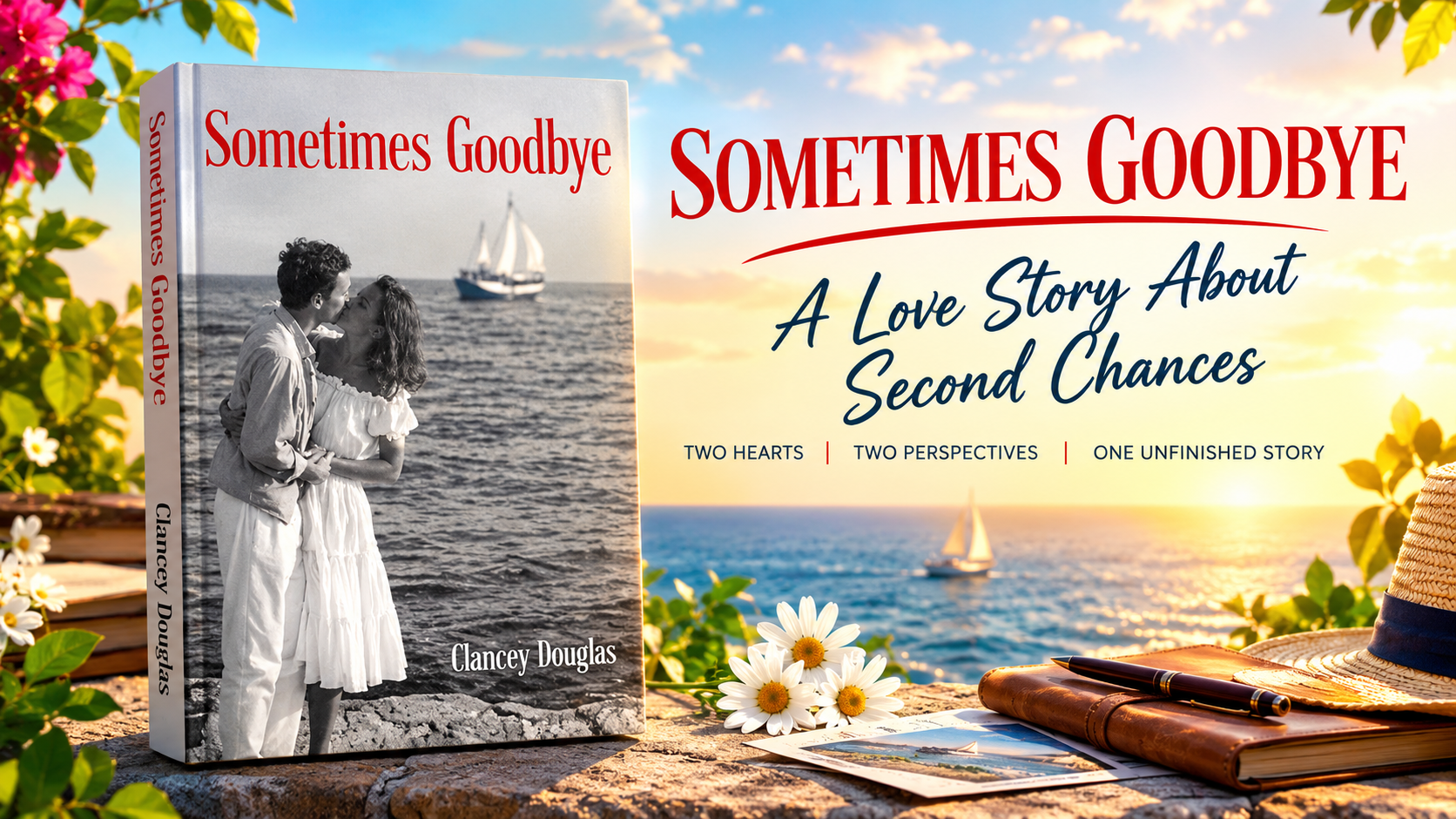
Quick Summary
This post asks why an old love can stay with you for years. Then it shows how Sometimes Goodbye by Clancey Douglas tells one goodbye from two sides. You will get a few comparisons, some honest caveats, and a short FAQ.
Introduction
You probably know the feeling. A song plays, or a street corner looks familiar, and someone from years ago walks right back into your head. Fiction about second chances in love lives in that moment. Clancey Douglas built a whole novel there. Sometimes Goodbye follows Lara and Daniel across years, breakups, and unspoken feelings. It lets you hear both of them, and that changes how a goodbye feels.
What Fiction About Second Chances in Love Does With Memory
Why does an old love hang on so stubbornly? Nobody has one clean answer. Some psychologists point to the Zeigarnik effect, the finding that people remember unfinished tasks better than finished ones. A breakup with no real talk afterward can feel like a task left open. The fit is loose, though. Researchers still argue about how well the original findings hold up, and love is not a to-do list.
Still, the idea explains something about second chance romance books. They rarely open on a happy couple. They open on a question that never got answered. Readers lean in because they have carried a question like that too.
The Version of Them You Keep
There is another pull, and it is less flattering. Over time, memory tends to polish old relationships. Psychologists call this rosy retrospection: we recall past events more fondly than we rated them in the moment. So the person you miss may be partly a draft you have edited for years.
That does not mean the love was fake. It may have been exactly as good as you remember. Nobody can check from the inside, and a book with two narrators at least gives you a second memory to compare.
Why Second Chance Love Stories Need Two Voices
Look at how a classic handles it. In Persuasion, Jane Austen puts Anne Elliot and Captain Wentworth in the same room again after years apart. Yet we stay mostly inside Anne’s head. We guess at Wentworth from the outside. Austen gives you one heart in full and the other in glimpses.
Sometimes Goodbye splits the weight another way. Each lead gets 16 chapters, so the book runs to 32 in total. Neither one is a side character in the other’s story. That matters in second chance love stories, because most breakups leave two private versions of the truth. Film fans call this the Rashomon effect, after Akira Kurosawa’s 1950 movie, where witnesses retell one event and disagree. Here the two accounts come from people who once loved each other.
Not every reader wants that much access, and that is fair. Some prefer the other half to stay a mystery, the way it does in Persuasion.
Meeting Lara and Daniel
Lara and Daniel share a history, and the book follows what each of them carries out of it. Years pass. Breakups happen. Things go unsaid. Because you get both voices, you can see what each one holds back from the other. You may catch yourself wanting to reach into the page and say it for them.
Many contemporary romance books hurry toward the kiss or the reunion. This dual-perspective romance novel takes a different road. Feelings that stay unspoken for years do not fade quickly, and the book treats them that way.
A Small Reading Trick
Try this with any two-voice novel. When a chapter ends, ask what the other person would say about the same stretch of time. You will not always guess right, and that is half the fun. It slows you down too, which suits a book about unspoken feelings. Maybe that is the point. Maybe it is only a habit.
Love Stories About Starting Over, Told by a Screenwriter
Clancey Douglas has experience in film and TV, and he is known for short stories and screenplays. European cinema inspires his work. You can see it in how the book is built. It feels like scenes cut together from two angles, one person at a time. Screenwriters learn when to cut away. In love stories about starting over, that skill keeps a scene from explaining itself to death.
The site calls Sometimes Goodbye his most personal novel yet. It does not spell out what personal means here. The even split of chapters hints at care for both leads, though that is a reader’s guess and not a stated fact.
The Trouble With “What If”
Most of us run the same loop if I had called. If she had stayed. Suppose he had just said it. Psychologists call these thoughts counterfactual thinking, and Neal Roese has written about how they can sting and still help people plan their next move. Both can be true at once.
So a reader who picks up a love story is not always hoping for a reunion. Sometimes the hope is smaller. You want to watch someone else ask the questions you keep asking.
Who Might Love It and Who Might Not
Be honest with yourself before you buy. If you want something fast and light, this may not be it. A story built on years, breakups, and unspoken feelings asks for some patience. Romance books about second chances come in many moods, and this one leans reflective.
One Goodbye, Two Versions
Nobody can promise you that a second chance leads back to the person you lost. Fiction about second chances in love cannot promise it either. What it can do is show you the whole room, and Sometimes Goodbye shows it through two sets of eyes. Whether that comforts you or stings may depend on who you are thinking of right now.
Questions Readers Ask Before They Start
Can I get a feel for the book before I buy it? Yes. The author’s site has a book trailer video, so you can sample the mood first. The ebook itself is on Amazon.
Do I need a painful breakup to enjoy fiction about second chances in love? No. Plenty of readers come to these books out of curiosity, or because they like watching people be honest. A past heartbreak may add weight, but you do not need one to get in.
What do readers say about it? One reviewer, Alchemist33, praised the structure and called it “a perfect blend of heartbreak and romance.” One review is one opinion, so read a few before you decide.